
That little label on a bottle of Italian wine has a lot to say about what’s inside.
The information included on a wine label can vary depending on where the wine comes from. American wine labels typically focus on grape varieties, for example, Pinot Noir or Cabernet Sauvignon. French and Italian wines, on the other hand, tend to highlight the region or appellation where the wine was produced.
Learning what to look for and how to read labels on bottles of Italian wine helps readers understand the wines’ features and decide which wine goes best with the meal at hand.
What information should you look for on an Italian wine label?
To begin, look for these five key details:
- Wine type: The grape variety, region, or brand name.
- Region: Where the grapes are grown and the wine is produced.
- Classification: Indicates the wine’s geographical designation and specific production requirements.
- Wine name: A specific name given to the wine that may be different from its grape variety or region.
- Producer name: Who is responsible for producing the wine.
Other key details often found on the label include the vintage, alcohol content, and aging designation. Together, all of this information can determine what to expect from the wine.
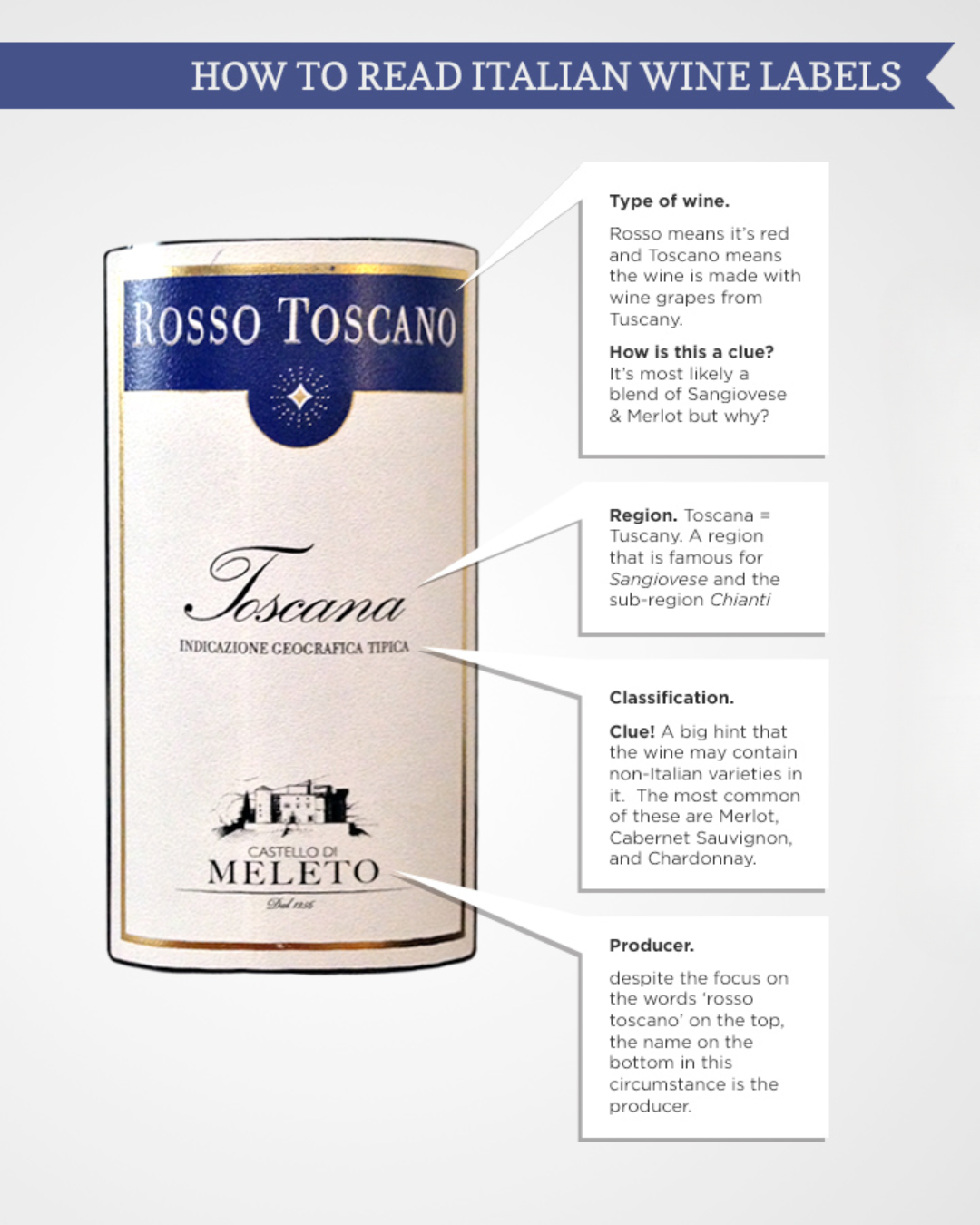
Image Credit: Wine Folly
How Italian Wines Are Labeled
Italian wines are generally identified in one of three ways, and understanding each makes it easier to recognize a wine’s distinct characteristics.
1. Grape Variety
Some Italian wines are labeled by the grape variety used to make them, as are American wines. The type of grape provides some insight into the flavor, body, and acidity of the wine. Italy has hundreds of documented grape varieties, and aficionados becoming more familiar with Italian wines will begin to recognize different varieties and identify which styles they enjoy most.
2. Region
Labeling wine by region is common practice in Italy. Think of the country’s most famous wines: Chianti, Barolo, and Barbaresco.
Region is important when it comes to winemaking because the climate, soil, elevation, and local traditions work in unison to influence wine from that area. Altogether, these factors are known as terroir. For example, Chianti is a Tuscan wine associated with the Sangiovese grape. Recognizing the region will give a general idea of what that wine will taste like, even if the label does not include the grape variety.

Barolo, one of Italy's most famous wines, is a regional wine from Piedmont in northwestern Italy.
3. Brand or Wine Name
Some Italian wines are labeled by a brand or wine name instead of a grape variety or region. This is most common with wines labeled IGT, a classification that gives winemakers more flexibility in grape selection and production methods.
For example, Tignanello is a famous Tuscan wine made primarily from Sangiovese, but with some Cabernet Sauvignon and Cabernet Franc. Instead of labeling the wine as Sangiovese or Chianti, it is sold under its own distinct name with the IGT classification.
Wine Classifications
In the 1960s, Italy established a system of geographical designations and production rules to organize the wines produced there into four main categories: DOCG, DOC, IGT, and VdT.
DOCG: Denominazione di Origine Controllata e Garantita
This is the highest classification in Italy’s wine system. To earn this classification, the wine must meet specific requirements relating to origin and production. Depending on the appellation (the legally defined geographic area where the wine is produced), the requirements can include:
- Grape varieties and where they can be grown
- Vineyard yields
- Winemaking methods
- Minimum alcohol levels
- Aging requirements
- Quality-control procedures
DOC: Denominazione di Origine Controllata
This classification indicates that wines produced in a defined geographic area follow set regulations for that appellation. DOC rules can specify characteristics like grape variety and production methods. Italy has over 300 DOC wine designations.
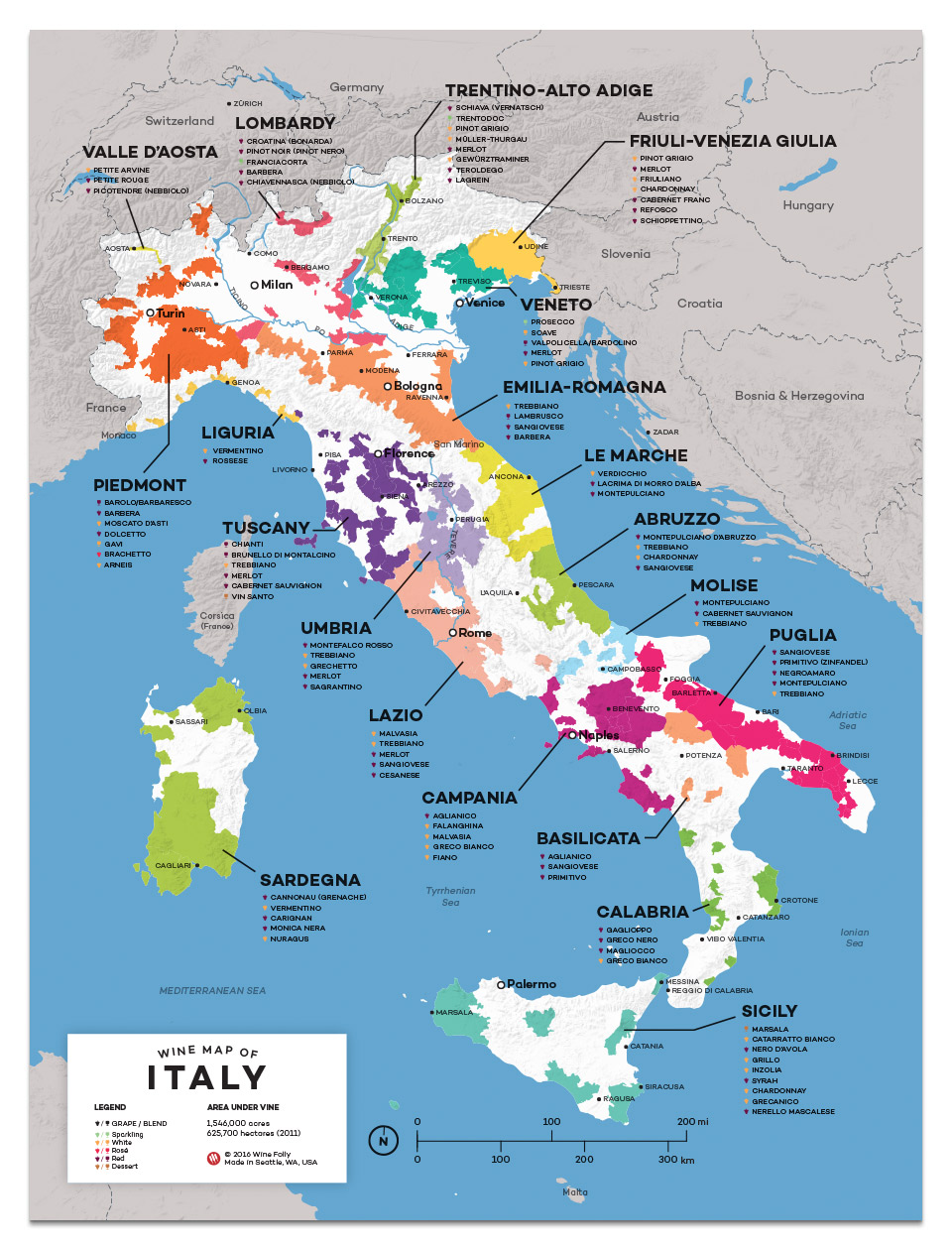
Map of Italian wine regions.
Image Credit: Wine Folly
IGT: Indicazione Geografica Tipica
These wines are still associated with a geographic area, but winemakers have more flexibility surrounding production than DOCG and DOC appellations. This allows for more experimentation with grape varieties and winemaking techniques. An IGT classification does not mean a wine is lower in quality. Some of Italy’s best wines fall under this category, but their production methods or blends simply don’t fit traditional appellation rules.
VdT: Vino da Tavola
VdT is often associated with Italy’s basic wine category. It has fewer geographic and production restrictions than the other classifications. Remember, a lower classification is no indication of quality. That depends on the producer, the grapes, and the winemaking style.
Common Wine Label Terms
It is common for Italian wine labels to include words that describe certain factors like vineyard, winery, location, or production style. Some of these terms will identify a property or winery. Others have a more regulatory meaning.
- Tenuta – Estate or property; often refers to a wine-producing estate
- Vigneto – Vineyard
- Castello – Castle; commonly associated with historic estates
- Cantina – Wine cellar or winery; may refer to a wine cooperative
- Azienda – Company or business
- Classico – Historic or original production zone
- Riserva – Indicates that the wine is subject to additional aging requirements
- Superiore – Indicates that the wine meets additional production requirements
What does the vintage on an Italian wine label mean?
The vintage refers to the year the grapes were harvested. The vintage is important when it comes to comparing bottles from different growing seasons.
Weather conditions vary from year to year, which influences a variety of factors, such as grape ripeness, acidity, and yields. This is what causes wines to taste differently across vintages even when they come from the same region and producer.
Not every Italian wine will have a vintage listed. Some wines are labeled as NV, meaning non-vintage. This generally means that the wine was made by blending wines from more than one harvest year. Some producers favor this approach as it allows them to maintain a consistent house style year-to-year.
Join the OIC Wine Club
Whether you are just starting to explore wine or you consider yourself a seasoned connoisseur, there’s a place for you in the OIC Wine Club! Membership is free, and you’ll enjoy great perks like limited-time specials throughout the year and invites to exclusive wine events.